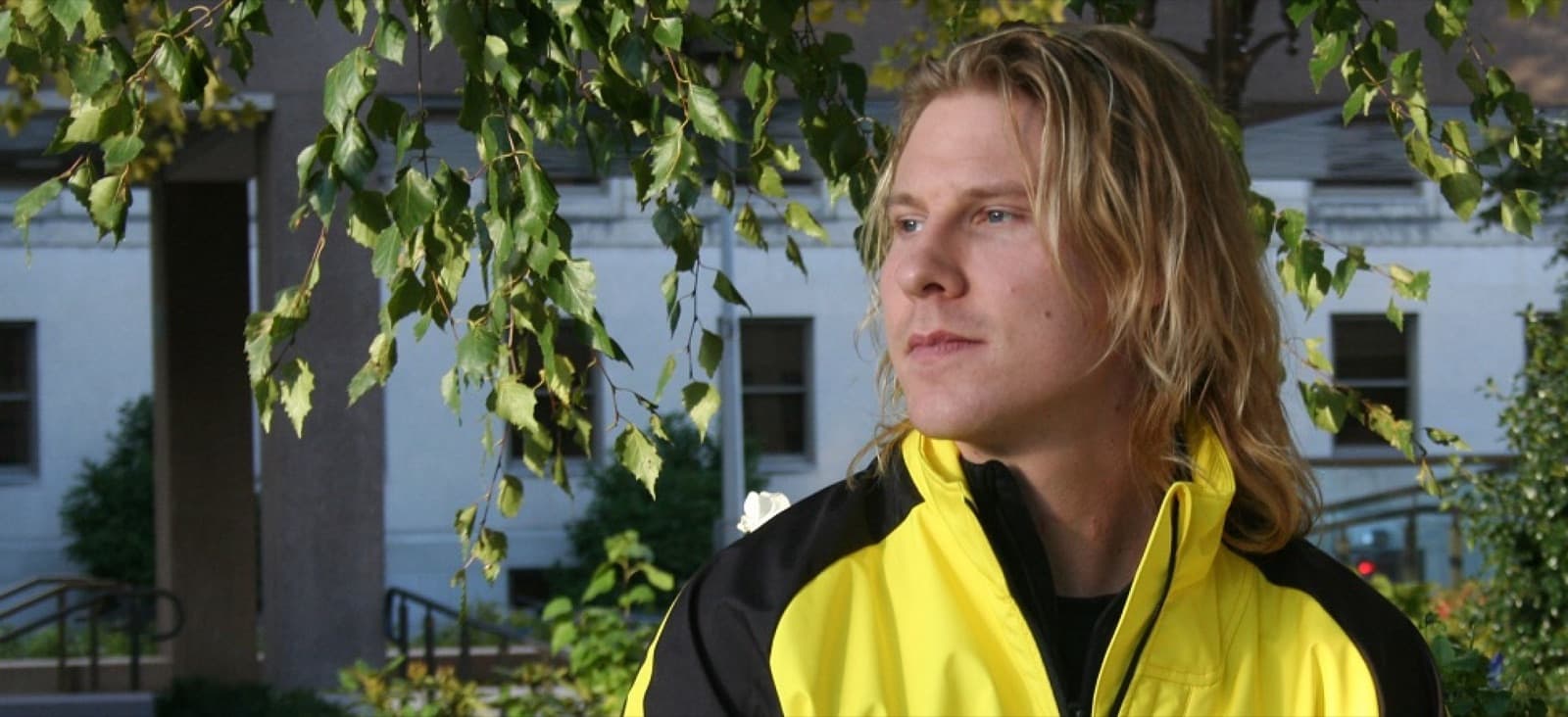
Imagine a crash so violent it tears your heart across your chest, shatters your bones in an instant, collapses your lungs, and drains more than half your blood — then imagine a two-month medically induced coma, waking with no memory of how you got there, and being told your life as you knew it was over. This is the story of Brian Boyle, known as "Iron Heart," who lives in Welcome, Maryland.
One month after graduating high school in 2004, 18-year-old Brian was driving home from swim practice over the Fourth of July weekend when a speeding dump truck plowed into his car. He was airlifted to a shock-trauma hospital having lost sixty percent of his blood; his heart had shifted across his chest, and his organs and pelvis were crushed. He died eight times during treatment and recovery, and recalls a priest reading him his last rites. The pain and injuries were so severe that doctors placed him in a medically induced coma. When he emerged two months later, he had no memory of the accident. He could see and hear but not move or speak, and as doctors, nurses, and his frantic parents talked around him, he heard the words "vegetable" and "nursing home."
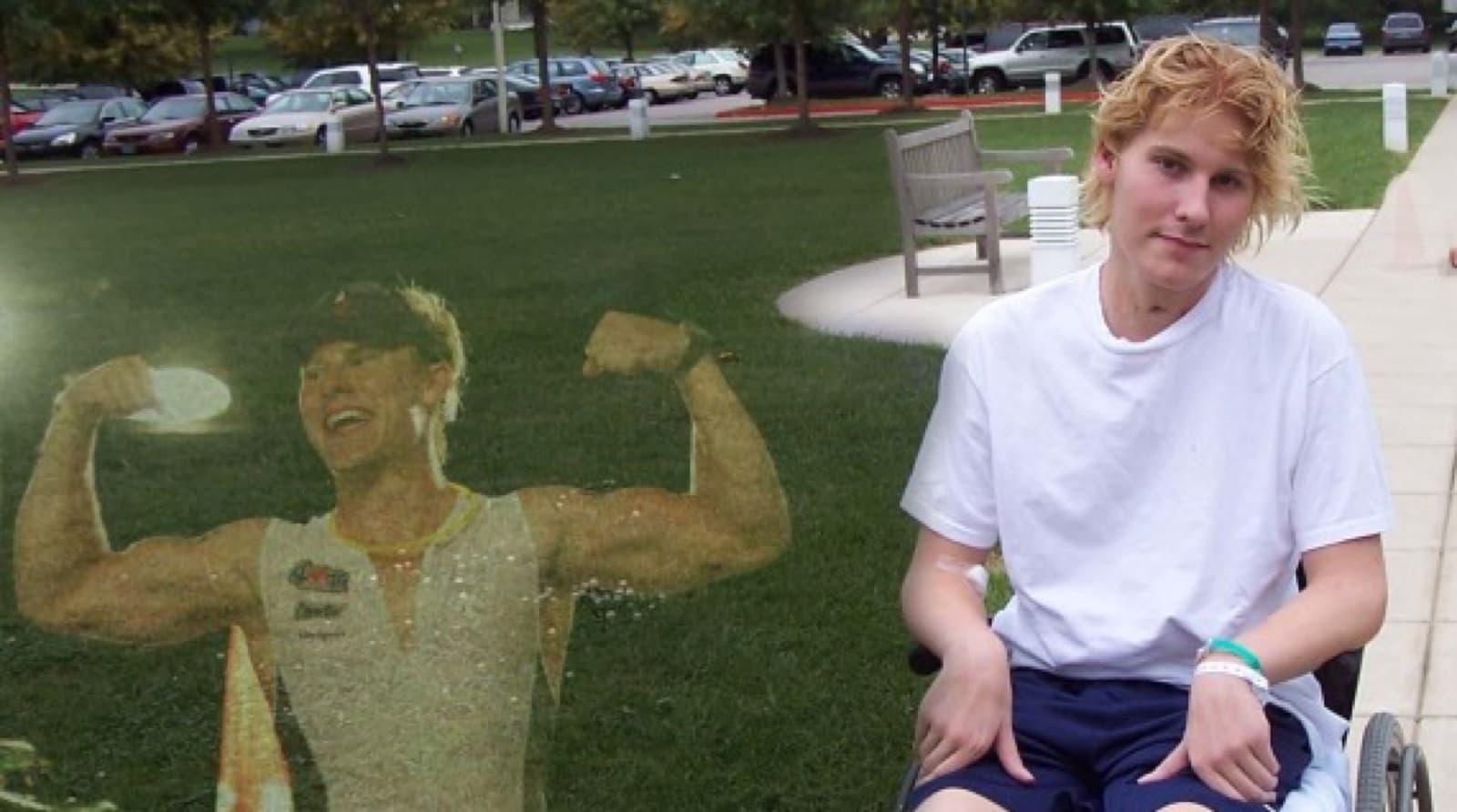
After two months in a coma, fourteen operations, thirty-six blood transfusions, and thirteen plasma treatments, Brian slowly regained consciousness — his eyes open, his body still completely paralyzed, unsure if he would ever leave Room 19 of the ICU. Weeks later, as he relearned how to speak, the first words he said to his father were that everything was going to be okay; he remembers the tears in his father's eyes that day, finally tears of joy. He was transferred to a rehabilitation center in Baltimore, where a team of physical and occupational therapists set to work rebuilding him. Some days he felt more like a science experiment than an eighteen-year-old, but he trusted the people who believed in his recovery even on the days he doubted it himself. He had to relearn how to talk, eat, shower, comb his hair, tie his shoes, and live independently — all the harder after losing a hundred pounds in the ICU. He continued the work through outpatient therapy in Waldorf, Maryland, and began writing down his experiences in a journal — entries that would later become his 2009 book, "Iron Heart."
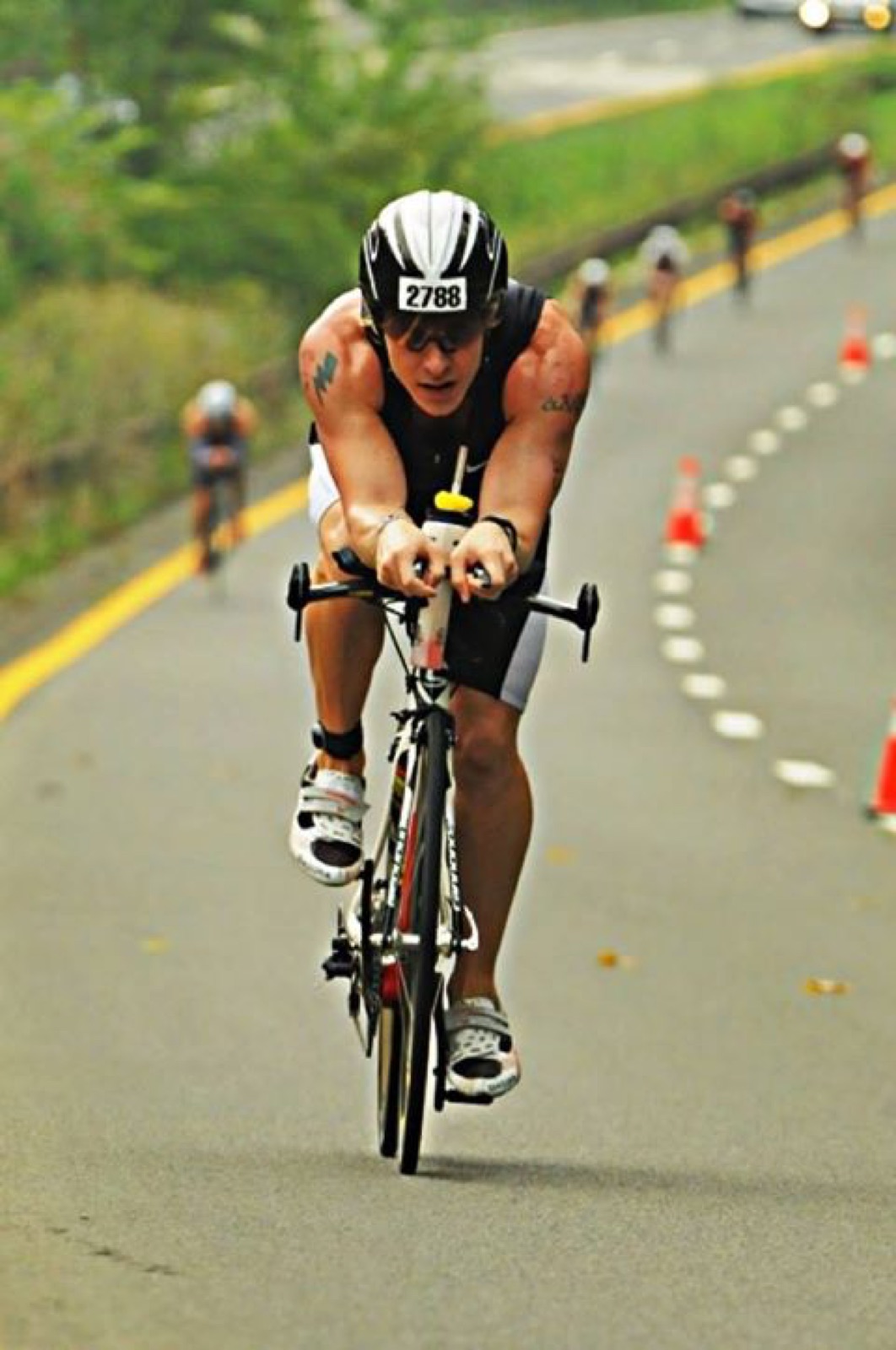
After months in a wheelchair, he took his first steps — with a walker, then a cane, then just the support of his parents and a safety belt around his waist. Walking again felt like a miracle, but Brian wanted more: to run, and then to swim. After a round of lung tests, he started easing back into the pool, a few laps at a time. Before the accident, he'd had three goals — go to college, swim on the team, and one day compete in an Ironman. Determined not to let his injuries take those goals from him, he enrolled as a freshman at St. Mary's College of Maryland six months later. Two years after that, on October 13, 2007, he fulfilled the third: competing in the Hawaii Ironman.
That finish — just three years removed from intensive care — is considered one of the greatest comebacks in sports history. The following year, he raced the Ironman 70.3 World Championship in Clearwater, Florida, and Men's Health named him one of its twenty heroes. In 2009, he published "Iron Heart" and was named the American Red Cross's Spokesperson of the Year. In 2010, he graduated cum laude from St. Mary's College of Maryland and made his first blood donation — at the same hospital that had once saved his life with thirty-six transfusions of his own. In 2011, Red Cross president Gail McGovern presented him with the Presidential Award for Excellence, and in 2012 he was honored at the White House with a "Champion of Change" award for his national volunteer work. "When times got rough for me out there on that course, and they did, I thought about all the wonderful people I met throughout my road to recovery — the patients, my healthcare providers, and especially my parents," Brian says. "I had to get to that finish line no matter what, even if I had to crawl the entire 140.6 miles. Crossing it was the ultimate thank-you to everyone who was part of my journey back to life."
Brian credits modern medicine with his life, and his medical team with his athletic ability. As a former ICU patient who has also spent years as a triathlete, he brings a rare perspective to his work as a coach — one shaped by watching the smallest signs of life, a blink or the twitch of a finger, move mountains in a patient's recovery. "I believe this foundation helps me be the best triathlon coach I can be, because I understand the power of the mind, the body, and the human spirit," he says.
Since 2007, Brian has volunteered closely with the American Red Cross, appearing at high-profile events and hosting blood drives across the country that have brought in thousands of life-saving units of blood. In 2011, he launched the Red Cross's Iron Heart Campaign to raise national awareness of blood donation, and he now serves as the organization's National Volunteer Spokesperson.
A professional speaker, Brian has delivered more than a hundred keynote presentations throughout his career. He is also an ACE-certified personal trainer and a USA Triathlon Level 1 coach, and is currently pursuing a master's degree in Health Communications at Johns Hopkins University. His story has been featured on The Ellen DeGeneres Show, NBC's Today Show, ESPN, and other programs around the world, earning Emmy nominations along the way.
Brian's book, "Iron Heart," is a first-person account of his ordeal and his recovery. Learn more at www.ironheartbrianboyle.com.
For the nearly five million people who receive blood transfusions each year, a donation can mean the difference between life and death — Brian is living proof. When he needed it, volunteer blood donors gave the American Red Cross thirty-six transfusions and thirteen plasma treatments to save his life. A donation can do the same for someone else. Learn more at the American Red Cross: www.redcross.org.