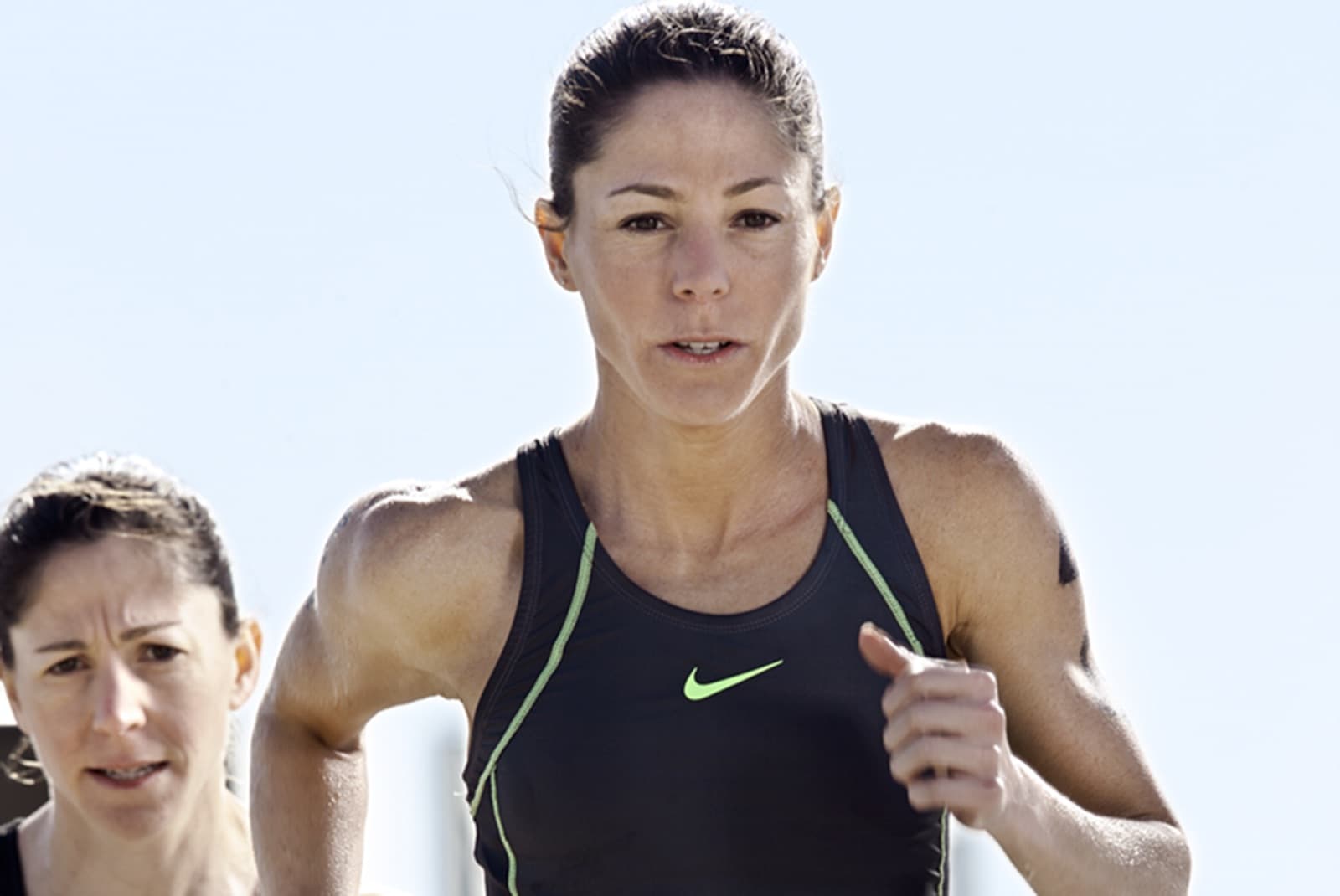
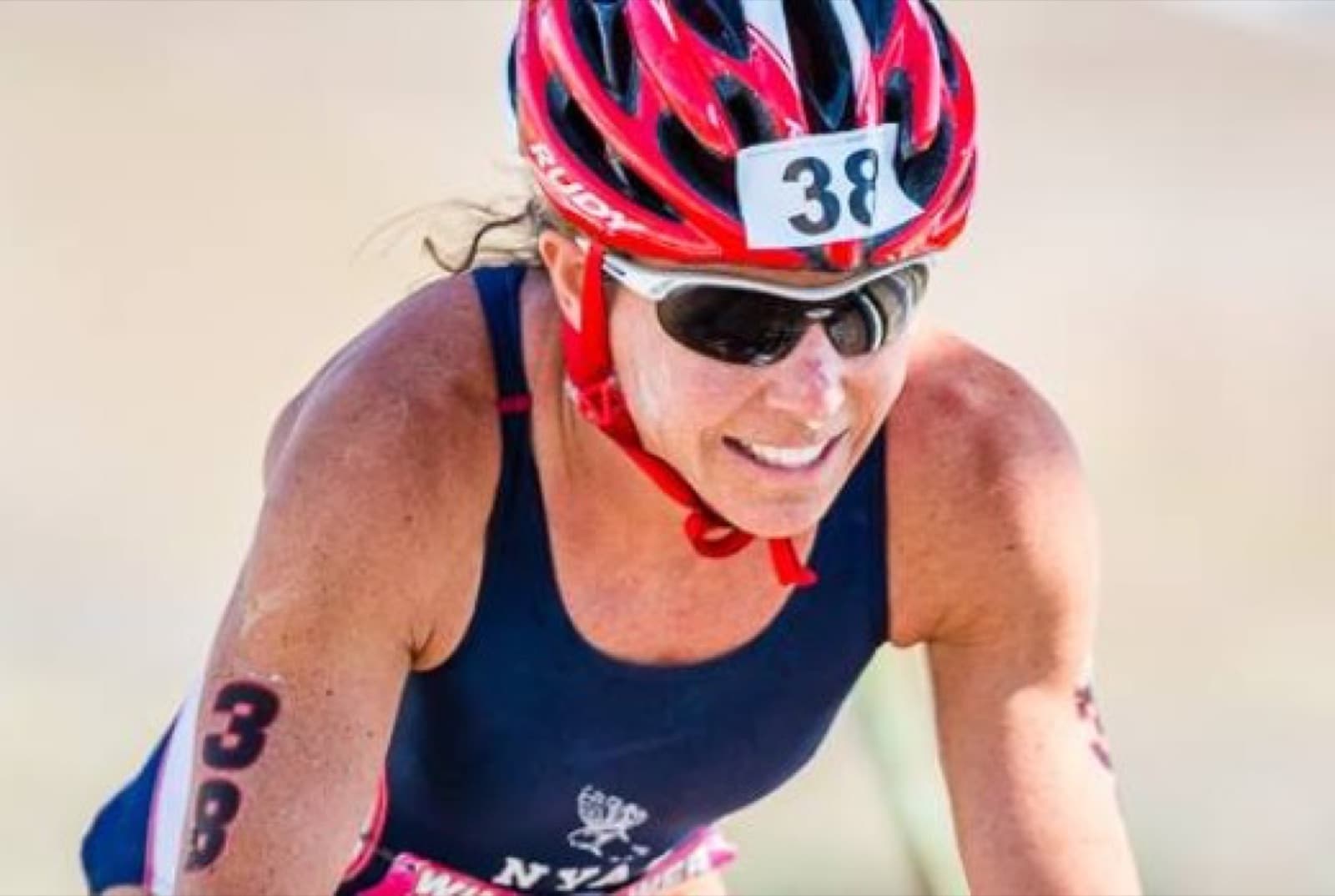
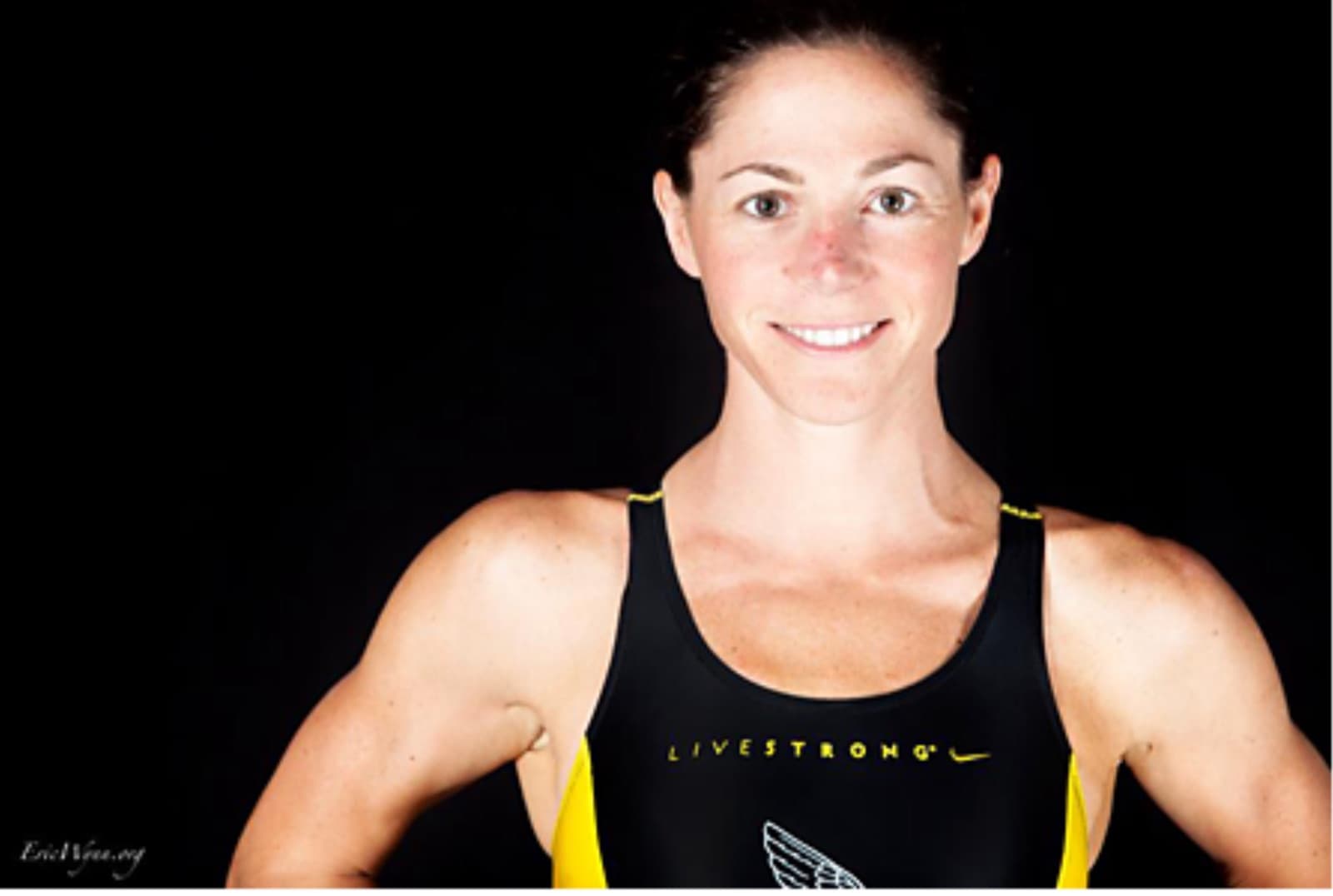
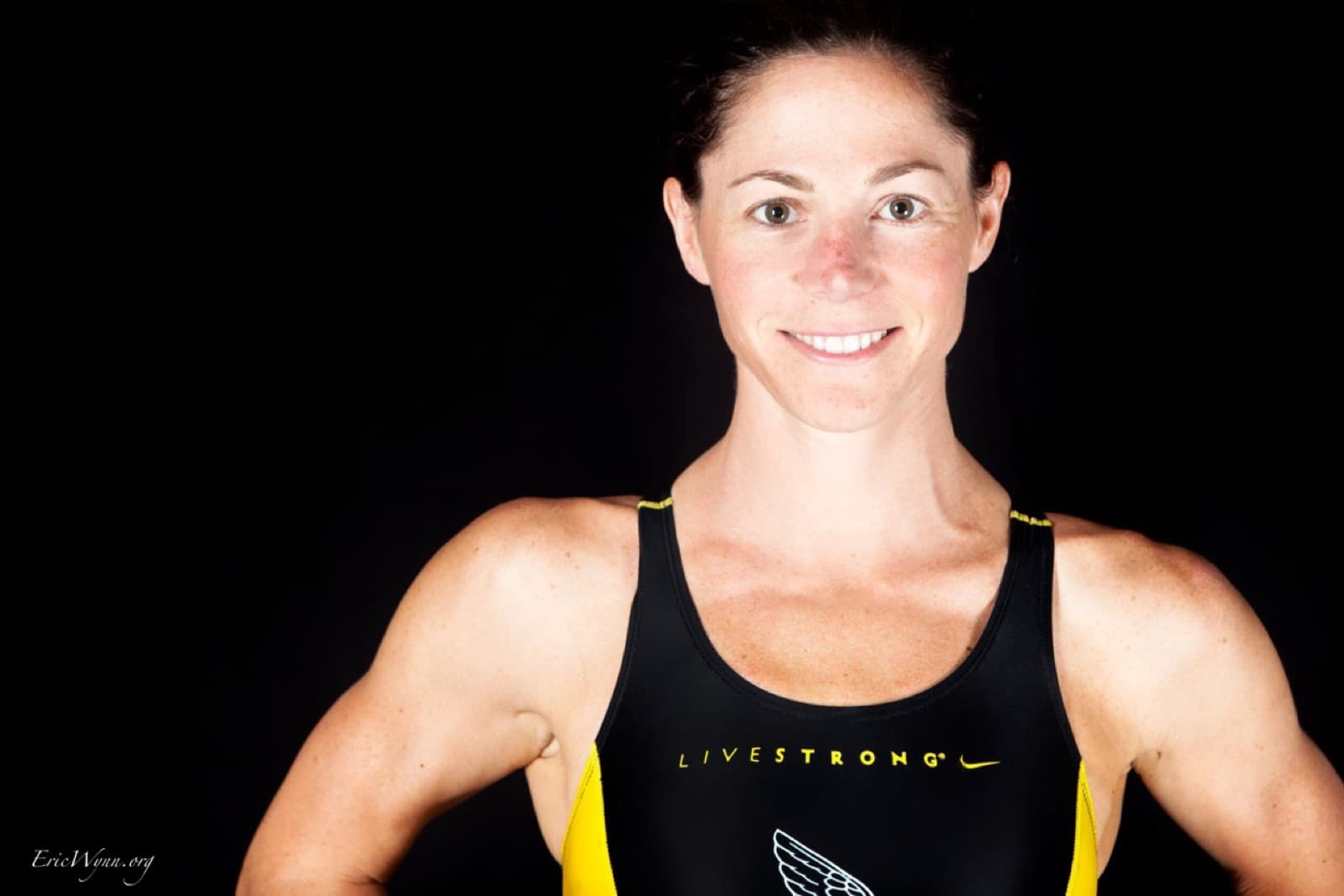
Laurel Wassner lives in New York City. The younger half — by five minutes — of the Wassner twins, she grew up in Gaithersburg, Maryland, competitive and athletic from the start: swimming in meets by age four, riding a bike, and racing cars home from kindergarten. She kept swimming through her school years and ran her first cross-country race in fifth grade. A survivor of Hodgkin's lymphoma, she became the first cancer survivor to win a full-distance triathlon, at Challenge Atlantic City.
In 1993, Laurel enrolled at George Washington University in Washington, D.C., and joined the swim team. Within a year, she'd earned a full scholarship to swim NCAA Division I — the biggest athletic achievement of her life to that point. After graduating, she moved to Brooklyn, her father's hometown, bought a used bicycle, and took up running.
Life was good — until 1998, just as she was hitting her stride, when she noticed three lumps on her neck after a hard run in Central Park. When they didn't go away, she saw one doctor, then another, then a third, before finally getting a diagnosis: cancer.
She was shocked and angry, feeling her life — just beginning in the city, at 23 — had been taken from her. As much as she wanted to disappear, she knew she had to face this new challenge with the same determination that had earned her a swimming scholarship and straight As in college. She decided nothing would stop her from beating the disease and reclaiming her life — though the execution wouldn't be easy. She credits a fierce support system — sisters, parents, aunts, grandparents, and friends — with refusing to let her surrender. "If I had a bad day, and there were a lot, I always had someone there trying to make things better," she says.
Six months of chemotherapy followed. Laurel doggedly kept up a workout routine on the treadmill at her health club, trying to hold onto some sense of normal life, even when it wasn't easy. Her twin sister, Rebeccah, moved from Washington, D.C. into Laurel's New York apartment to help her through it, acting as though everything was normal even as she worried it might not be. On the days Laurel underwent chemo, Rebeccah worked out until she was utterly exhausted — her way of sharing her sister's pain.
Before she felt well enough to exercise again, Laurel was down, physically and mentally, unsure if she'd ever be an athlete again. Her early twenties already felt uncertain enough without a cancer diagnosis on top of it, and she leaned hard on her sisters to get through it. Years of fatigue and nausea, layered with the fear that the cancer might return, made staying positive difficult. "I spent a lot of time getting pep talks. I learned to live day by day instead of making grand plans, and slowly chipped away until things started to come together," she says — part of why she's so committed to sharing her story, in case it reaches someone who needs to hear it.
Her first goal after treatment was building a career in photography — far less physically demanding than the training her sister Rebeccah, a world-class triathlete, was doing. Rebeccah had been a marathoner before switching to triathlon, winning the national amateur age-group championship in 2003 and turning pro the following year as USA Triathlon's Rookie of the Year. Laurel, still rebuilding her strength, signed up for a Mother's Day 5K with her sisters. The race had a division for cancer survivors — and she won it. It was her first race back, about four minutes off her personal best, but a huge victory. She had no idea that within a few years, she'd be racing for a living.
She kept adding activity to her life a little at a time. A new job at Men's Journal put her around athletes and fit people every day, and no one there knew she'd once been one herself. Rebeccah passed down an old tri-bike, her mom gave her cycling shoes for her birthday, and she started swimming again in earnest. When a pelvic stress fracture sidelined Rebeccah in 2005, she became Laurel's trainer instead, keeping her sister healthy and shaping her into an extraordinary triathlete in her own right. Together, they now race around the world, raising awareness and hope for people battling cancer and other life-changing obstacles.
In the summer of 2006, Laurel entered her first triathlon. She didn't place well, but she loved every minute, smiling as she passed other racers, aware she had a long way to go before turning pro — but certain, for the first time, that it was possible.
She kept working in magazines while training as much as she could, and took a trip to watch Rebeccah race the ITU World Championships in Lausanne, Switzerland, where her sister finished among the top five Americans. Watching that race in person convinced Laurel she wanted to be in the water, on the bike, and on the course herself. The following summer, racing as an amateur, she finished 2nd in the U.S. championship race, with the fastest swim and run splits. In 2008, she left her magazine job to race full-time. She was named Rookie of the Year in 2010 and won her first professional race at the Columbia Triathlon — the first of a steady string of podiums and victories. In 2014, she won her first Ironman-distance event, becoming the first cancer survivor to do so, and set her sights on qualifying for the 2015 Ironman World Championship.
Laurel hasn't forgotten where she came from. She draws on her past every day in training, using that determination in every race, and thinks often of others fighting battles of their own. "I'm fortunate for the people who helped me get past my doubts, fears, and obstacles," Laurel says. "To be able to repay that is incredibly rewarding — and even more inspiring to me."
Learn more about Laurel and Rebeccah at www.wassnertwins.com.