
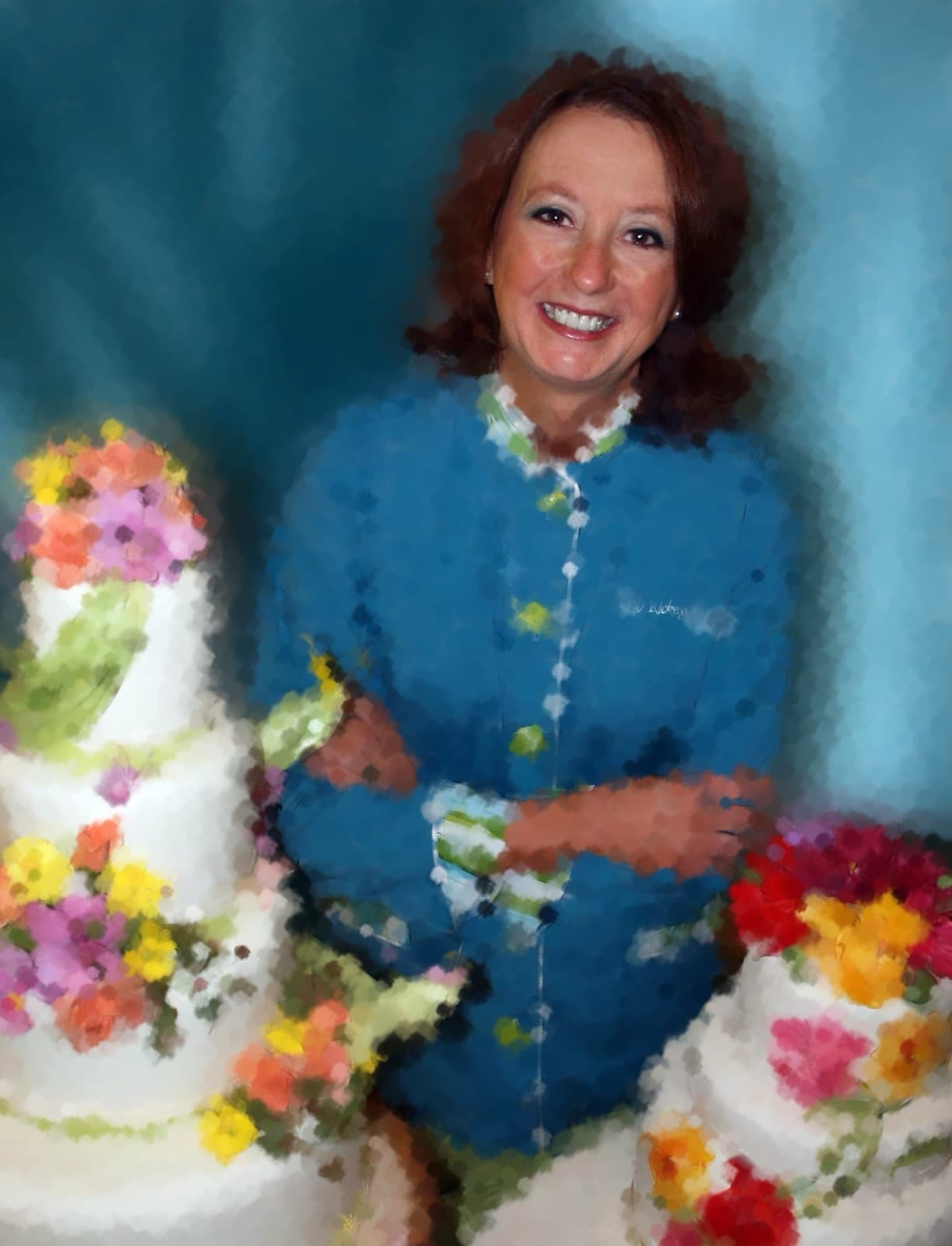
Ruth Rickey, of Oklahoma City, is a Certified Master Sugar Artist who travels the world teaching, demonstrating, and judging cake competitions. She fell in love with cake decorating while managing an upscale grocery store's bakery in the city she still calls home. After five years, she was named top bakery manager among IGA's 3,200 stores across 31 countries — and knew it was time to open her own shop.
Life was good, and in 2000 she opened Ruth's Sweete Justice Bakery. But in March 2001, she heard words no one wants to hear: "You have cancer." At the time, Ruth and her husband Rob were trying to start a family, and she was working brutal hours after expanding her bakery. When a stomach bug seemed to be going around, she assumed she'd caught it — weak, nauseated, in pain — and kept working, until she started passing out every time she stood and her friends and family insisted she see a doctor. Her only doctor at the time, who treated her thyroid, was stumped and sent her for an ultrasound. It quickly became clear that a cyst in her ovary had ruptured, and she'd been bleeding internally for days. She needed an immediate full hysterectomy.
During treatment, doctors diagnosed Ruth with chronic myeloid leukemia — at the time, a disease with no viable treatment and no cure, typically fatal within two years. She had just expanded her thriving bakery and couldn't process the idea of dying. She and Rob braced for the news that they'd never have a child together, believing that was the worst they'd hear. It wasn't. Rob went home for the night while Ruth settled in to await surgery, only to learn that CML wasn't just incurable — it was untreatable. Chemotherapy and radiation had no effect on it. The only option was a pill that would make her feel like she had the flu while controlling her blood counts. Doctors gave her two to five years to live.
Ruth spent two and a half weeks in the hospital; her blood counts were so unstable that she kept bleeding internally after the hysterectomy, requiring two more follow-up surgeries and several days in the ICU. She left the hospital weighing 88 pounds — skeletal on her 5-foot-8 frame, wearing children's XL clothing. Days after returning home, new pain signaled a failing gallbladder, which had to be removed. Four surgeries in just over two weeks, and her fight was only beginning.
Ruth began weekly bloodwork to monitor her condition. Doctors were working to get her strong enough to start the flu-mimicking pill when her miracle arrived: six weeks after her diagnosis, the FDA approved Gleevec, the first of a new class of cancer drugs. It regulated her blood counts, then went to work on her bone marrow. Ruth became the first patient in Oklahoma to take it. She didn't lose her hair or experience typical chemo side effects — though she did develop a head-to-toe rash that faded over time but never fully disappeared. After a couple of years on Gleevec, doctors told her she was in cytogenetic remission: the Philadelphia chromosome associated with her leukemia had become undetectable in her genetic tests. She wasn't cured, but the disease was effectively invisible.
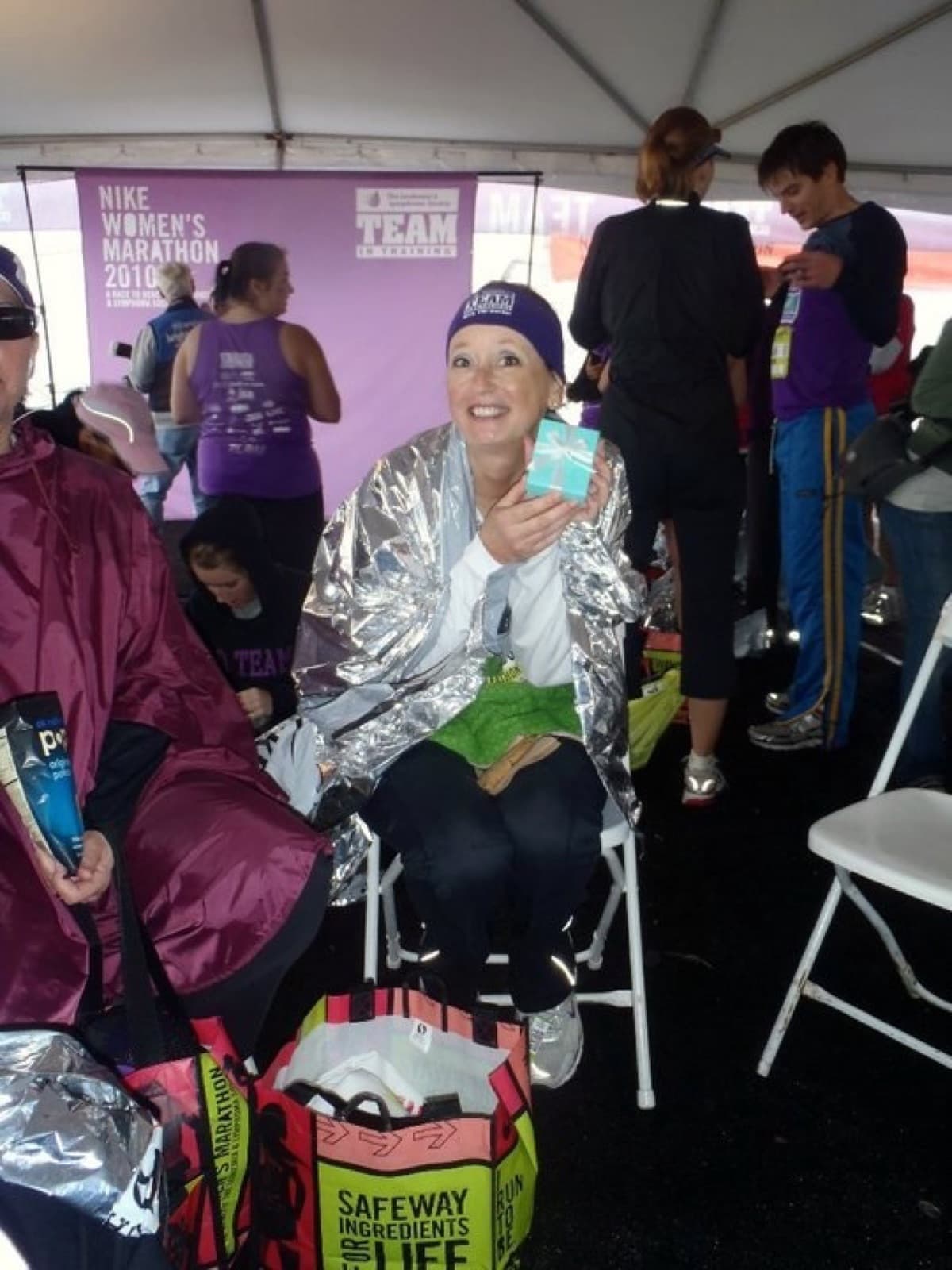
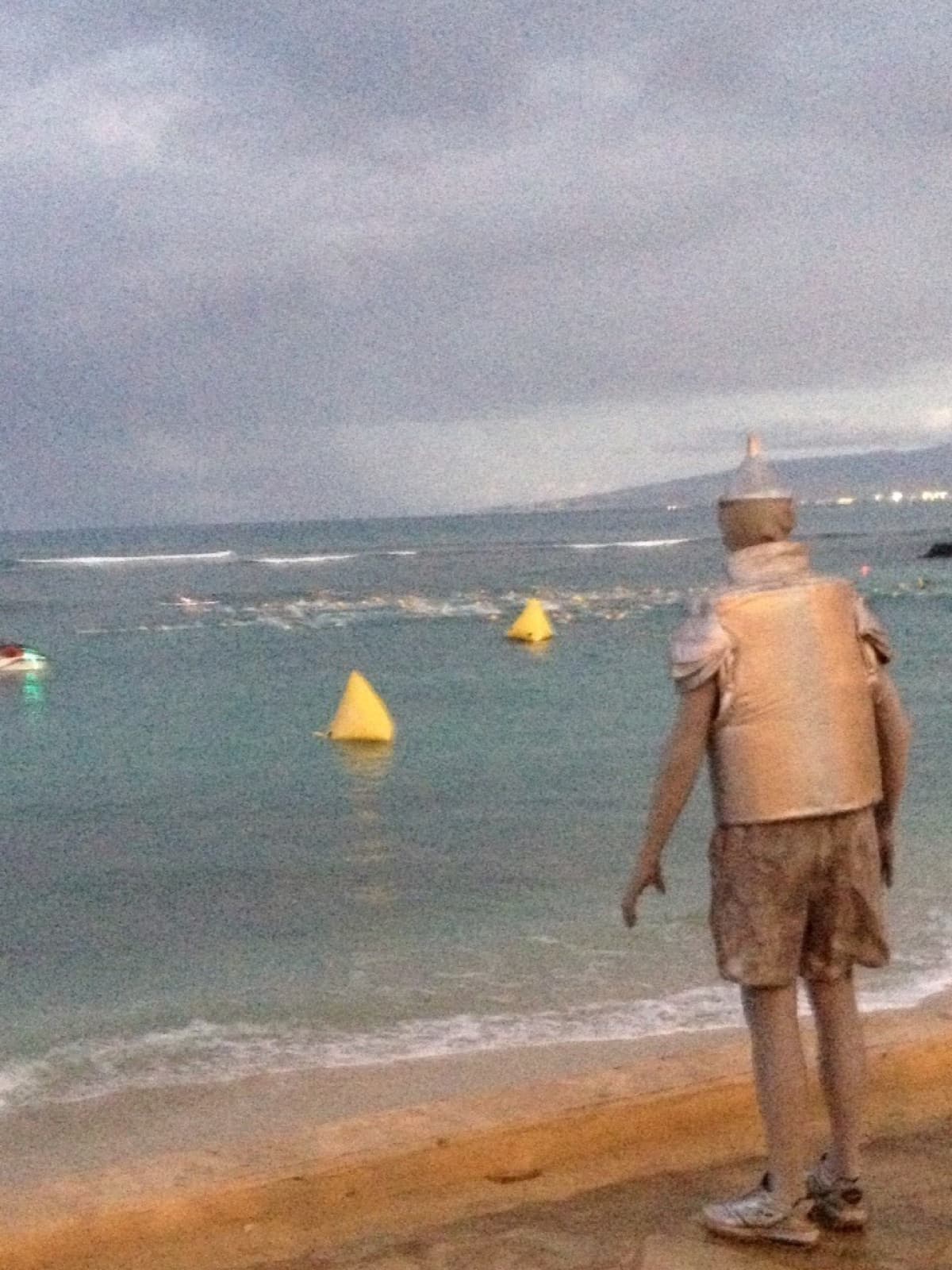
Feeling she owed a debt to the Leukemia & Lymphoma Society for the research behind Gleevec, Ruth found her calling after a friend brought her son — newly diagnosed with leukemia — to meet her, hoping Ruth could reassure him he'd be okay. She picked up a flyer for Team in Training and began fundraising for the LLS, completing full and half marathons and century rides. Determined to earn the LLS Triple Crown, which required a triathlon finish, she joined the "Go Mitch Go" team — a foundation started by John and Tracy Whitaker in memory of their son Mitchell, whose last words were "Keep fighting," and which has raised more than $130,000 for childhood leukemia research. Ruth signed up for the Tinman Triathlon to continue raising money for the cause, and her husband Rob joined her for the race.
The swim was Ruth's greatest struggle. She couldn't get her breathing under control, hyperventilating and panicking in the water, her exercise-induced asthma flaring up until it overwhelmed her. She got good at saying "I can't" — and at quitting in practice. Then she read a book describing how the words we tell ourselves shape how things go, and realized her jokes about drowning and failing weren't helping. She needed to start telling herself something different. The next day at the pool, she told herself, "I can do 100 yards" — and where she'd once been exhausted after 25, she made it, and texted friends in excitement. The next night, she swam 300 yards; two nights later, 750. Her confidence built steadily in the pool, but the panic returned the moment she tried open water, and she struggled to cover any real distance there. By the time she left for Hawaii, she could manage the distance in a pool but was terrified of the ocean.
Ruth's team knew how frightened she was. Her local coach, Ryan Ellis, told John Whitaker she was struggling with panic; John relayed it to the traveling coach, Steve Blackmon, who called the race organizers and convinced them — for the first time ever — to provide Ruth a swim escort. Steve told her it was time to meet her "swim angel." Race volunteers introduced her to Carolyn, a tiny, kind Hawaiian lifeguard and excellent swimmer who would escort her through the swim. Ruth cried as Steve hugged her and told her she could do it. "I should probably note that I am not scared of much — spiders, heights, cancer, no biggie. This got me," she says. The night before the race, the Go Mitch Go team gathered for their traditional pre-race pasta dinner.
She entered the water in tears as the starting gun fired. Bodies jostled, kicked, and splashed around her even after she'd let most of the field go ahead. By the first buoy, all she could think about was getting out of the water. She told Carolyn she needed to quit; Carolyn told her no. Around then, her "surfboard angel," Joshua, arrived — a spotter who let swimmers hold his board to catch their breath, and who stayed with her for the rest of the course. She had two angels now. She pressed on, resting when she needed to, keeping the panic at bay as she went. Meanwhile, Rob's wave had started twelve minutes behind hers; he'd promised to find her in the water, and despite her hope to be too far ahead, he did. He and Carolyn boxed her between them, helping her sight her path — Carolyn swimming ahead for Ruth to follow, Joshua pulling alongside whenever she needed to catch her breath. It felt endless, and she was deeply exhausted, but when she glanced up, a rainbow appeared directly in her sightline, becoming her focus for the final 200 yards. She took it as a sign to relax. About an hour after entering the water, in tears, she emerged alongside Rob — the last two swimmers to finish. When she later asked Tracy Whitaker if she'd seen the rainbow, Tracy told her, "Mitchell sent it for you." They hugged and cried together.
From there, Rob and Ruth were so far behind the rest of the field that continuing felt almost absurd. They rode their bikes anyway, then set out on the final six miles of running. As they neared the finish, their team had spread out along the course to cheer them home — treating them like rock stars rather than the last finishers of the day. On that day, Ruth became a triathlete. "It does not matter where you finish — the key is to finish. And to keep fighting," she says.
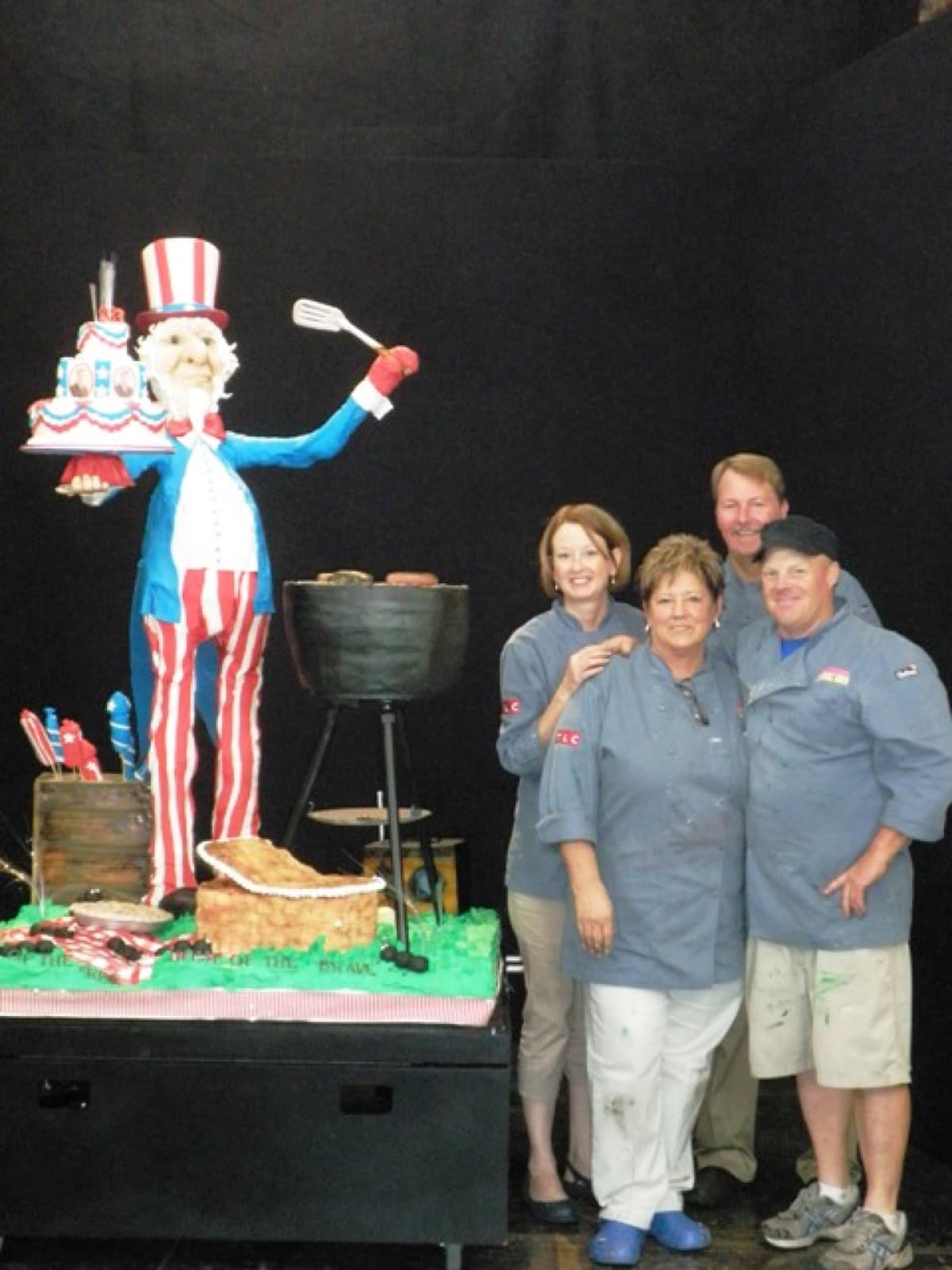
Ruth is an ICES Certified Master Sugar Artist who has appeared on WE tv's "Wedding Cake Wars" (her team won), twice on TLC's "Ultimate Cake Off" as assistant to two-time winner Pat Jacoby, and in three Food Network specials about the Oklahoma State Sugar Art Show. She launched SugarZen in 2012 to help reignite people's passion for the sugar arts, and wherever she goes, she tends to become an impromptu "sugar therapist," reminding people why they fell in love with cake decorating in the first place. Her blog offers advice on subjects few others touch. Learn more at www.ruthrickey.com.
Ruth remains in genetic remission today and pays the miracle forward through marathons, half marathons, century rides, triathlons, and charity events benefiting the Leukemia & Lymphoma Society. Learn more at www.lls.org. The Go Mitch Go Foundation, founded in 2009 to honor Mitchell Graham Whitaker, raises money for lifesaving blood cancer research, awareness, and support for families battling the disease. Learn more at www.gomitchgo.com.